
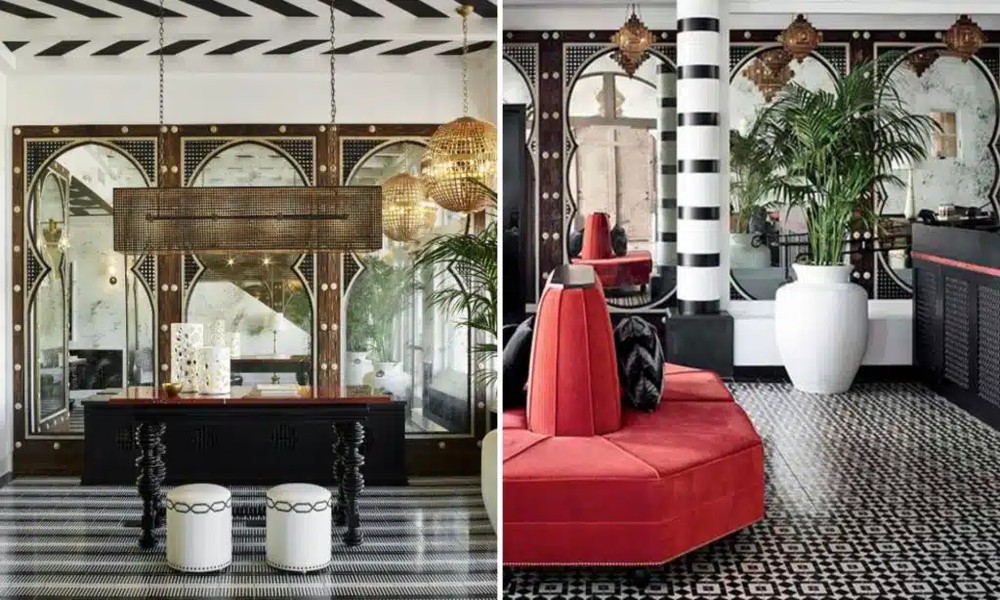
Walk into a room designed by a truly accomplished interior designer cheshire and, if you know their work, you will recognise it immediately. Not because every project looks the same, but because there is a consistency of sensibility: a particular way of handling light, a recurring relationship between materials, a sense of proportion that feels unmistakably theirs. That quality, which the design world tends to call a signature style, is one of the most valuable and most elusive things a designer can possess.
It is also, almost universally, the product of years of deliberate work, accumulated experience, and a willingness to look honestly at what you are drawn to and why. This article explores how that process unfolds, and what separates designers who develop a genuine creative identity from those who remain, however competently, in service of other people’s tastes.
It Begins With Observation, Not Education
Most designers will tell you that their education gave them the tools to practise, but not the voice to express themselves. The technical vocabulary of space planning, the understanding of structure and light, the knowledge of materials and finishes: these can be taught. A signature style cannot.
What can be cultivated, and what the best designers cultivate obsessively from very early in their careers, is the habit of close observation. Looking not just at interiors but at everything: at the quality of light on a particular afternoon, at the texture of a wall in an old farmhouse, at the way a colour changes between a fabric swatch and a metre of cloth in natural daylight. At the architecture of a town square in a city they are visiting for the first time.
The designers who develop the most distinctive voices tend to be voracious gatherers of visual experience, and they tend to be highly specific about what they respond to. Not “I love Italian design” but “I am drawn to the particular quality of handmade ceramics from a specific region of Puglia, and to the way they sit against rough plaster walls.” That specificity, developed and refined over years, eventually becomes the raw material of a creative point of view.
The Role of Early Work
Most designers spend the early years of their career working for someone else, and this apprenticeship period is more formative than it is often given credit for. Working within another designer’s aesthetic teaches a set of skills that are almost impossible to acquire any other way: how to execute a vision at a high standard, how to manage the gap between a design on paper and a reality on site, how to make decisions under pressure and budget constraints.
But it also provides something equally important: a clear understanding of what feels instinctively right and what does not. Every designer who works for another will have moments of quiet disagreement: a material selection they would have made differently, a furniture arrangement that does not quite match how they see the space, a colour relationship they find unsatisfying. These moments of divergence are not problems. They are the earliest signals of an emerging creative identity.
The most self-aware designers pay close attention to these feelings of friction. They note them, question them, and over time begin to understand what they say about their own sensibility. By the time they are working independently, they have already developed a fairly clear picture of their instincts, even if they have not yet had the opportunity to act on them consistently.
Finding a Philosophy, Not Just an Aesthetic
There is an important distinction between an aesthetic and a philosophy, and the designers with the most enduring reputations tend to be guided by the latter.
An aesthetic is a visual style: the colours, materials, and objects that appear repeatedly in a designer’s work. A philosophy is the set of beliefs and values that generate those choices. It is the difference between “I use a lot of natural stone and aged brass” and “I believe that materials should always reveal their origins and improve with age.” The first is a description of appearances. The second is a way of thinking about design that will produce different outcomes in different contexts, but always in alignment with the same underlying conviction.
Developing a philosophy requires a level of introspection that does not come naturally to everyone, and a willingness to articulate ideas that can feel uncomfortably abstract when the daily work is fundamentally practical. But the designers who have done this work tend to be considerably more consistent and more confident in their decisions. They can explain why they are making a particular choice, not just that they like it, and that clarity is compelling to clients.
This philosophy does not have to be complex. Some of the most distinctive designers in the world operate from a very small number of guiding ideas. One might be: “The best rooms always have a single element of tension.” Another: “Comfort and beauty are never in conflict.” Another: “A room should change as the light changes.” These are not rules so much as lenses, and they produce work that is instantly recognisable because it is animated by a consistent intelligence.
The Influence of Place
A significant number of the most distinctive interior designers working today have developed their sensibility in close relationship with a particular place or landscape. The designers who work predominantly in coastal settings develop an acute understanding of how light behaves near water, and how the palette of a coastal landscape can be translated into an interior without becoming literal or cliched. Those who work in historic rural buildings develop an instinct for the relationship between old architecture and contemporary living that becomes the defining characteristic of their practice.
This is not about parochialism or limitation. It is about depth. A designer who knows one type of architecture, one quality of light, one set of material traditions very well will bring a level of specificity to their work that a designer with broader but shallower experience cannot match. And that specificity, when expressed with confidence, reads as style.
Some designers consciously seek out a connection to place as a way of grounding their work. They might spend extended time in a particular region, studying its vernacular architecture and craft traditions, or develop long-term relationships with local makers and craftspeople whose work embeds a sense of origin into everything they produce. The result is work that feels rooted and genuine rather than assembled from internationally available components.
How Repeat Clients Shape a Voice
One of the less-discussed factors in the development of a designer’s style is the role of long-term client relationships. Designers who work repeatedly with the same clients over many years are given something rare: the opportunity to deepen a creative conversation rather than start a new one with each project.
These relationships are generative in ways that single projects rarely can be. A client who has worked with a designer once and trusts the outcome will give considerably more creative latitude on the next project. They will take risks they would not have taken the first time. They will push back less on choices that initially feel unfamiliar. And because the designer knows them, knows how they live and what they value, the resulting work is more precisely calibrated to who they are.
The designer benefits in equal measure. Working within a trusted relationship allows them to be bolder, to pursue ideas that might be harder to sell to a new client, to experiment with materials or spatial arrangements that are genuinely new to their practice. Some of the most significant creative breakthroughs in a designer’s career happen in the context of a project for a client they have known for a long time.
The Discipline of Editing
One of the most reliable markers of a mature creative identity is the ability to edit: to recognise what does not belong in a scheme and to remove it without regret, even when it is beautiful in isolation. This discipline is harder to develop than it sounds, and many designers take years to acquire it fully.
The tendency in the early phases of a career is to include too much: too many materials, too many references, too many gestures towards different ideas. Each element might be individually strong, but the overall effect is one of noise rather than voice. The confidence to simplify, to trust that a room can sustain attention with fewer elements rather than more, comes with experience and with a deepening understanding of one’s own sensibility.
Editing also applies to the broader body of work. Designers with a strong creative identity are, almost by definition, selective about the projects they take on. They recognise that working outside their area of genuine strength produces weaker results and dilutes the coherence of their portfolio. The willingness to decline projects that do not align with their vision is, paradoxically, one of the things that makes their vision stronger.
Signature Style Is Not a Limitation
A common misconception about having a signature style is that it constrains a designer’s range: that working with a distinctive creative identity means producing work that is repetitive or inflexible. The opposite tends to be true.
A designer with a clear philosophy has a framework for making decisions in any context, however unfamiliar. They can work in a Georgian townhouse or a contemporary apartment, in a rural setting or an urban one, for a client whose taste differs significantly from their own, and still produce work that is coherent and distinctive because it is generated by the same underlying thinking.
What changes between projects is the expression: the specific materials, the particular palette, the details that respond to the architecture and the client. What stays constant is the intelligence behind the choices, the sense of proportion, the quality of attention. Those are the things that make a designer’s work recognisable across very different contexts, and they are also the things that clients with high expectations are looking for when they seek out a designer with a genuinely formed creative identity.
The Work Is Never Done
The most interesting designers are those who continue to develop their sensibility throughout their careers, never settling into a fixed visual language but always questioning, absorbing new influences, and allowing their point of view to evolve. The signature style that defines a designer’s work at fifty is rarely identical to the one that defined it at thirty, even if the underlying values are consistent.
This ongoing development requires a particular kind of intellectual humility: the willingness to admit that the work can always be better, that there are always things to learn, and that a creative identity is not a destination but a continuous practice. The designers who maintain that attitude tend to produce their most compelling work not in the flush of early recognition but across a long career characterised by genuine depth and increasing confidence.
That combination of confidence and curiosity is, ultimately, what a signature style is made of.