
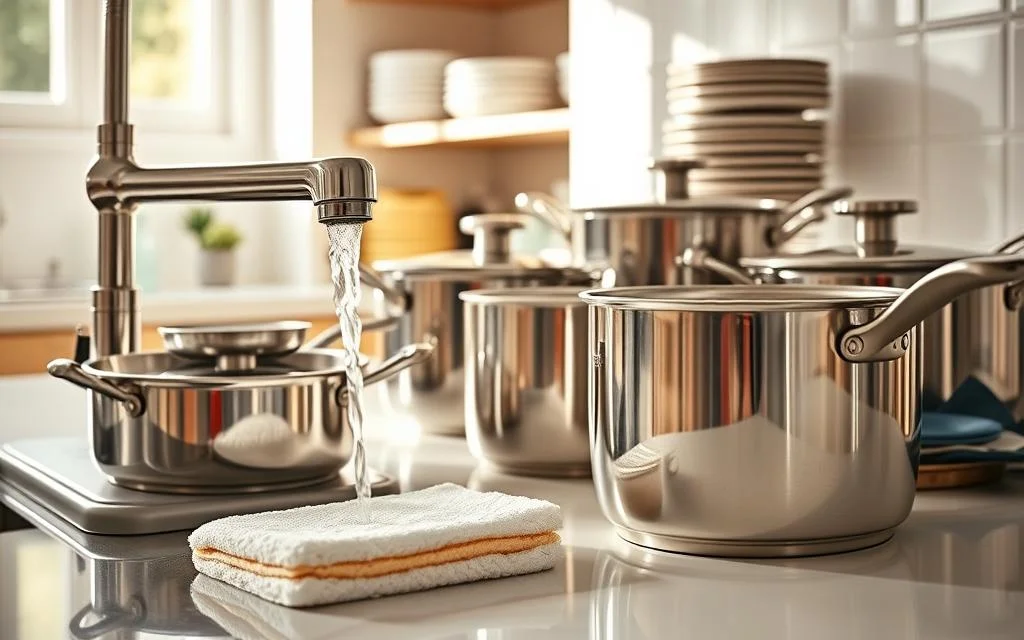
Stainless steel’s blend of beauty and durability makes it the gold standard in kitchens and high-end design. Its high chromium content forms a self-healing oxide film (passivation layer) that resists rust and stains . Unlike ordinary steel, stainless rarely flakes or pits. In fact, studies show that “materials that resist surface changes, e.g. stainless steel, will remain more hygienic” under wear . Top designers appreciate stainless for this combination of performance and style – it cleans up easily, looks modern and is virtually indestructible with proper care. No wonder 304-grade stainless (18% Cr, 8% Ni) is “the most widely used alloy” globally , prized for its rustproof, easy-clean finish. Even luxury kitchen fixtures rely on it: as we’ll see, high-end sinks are made of 304 stainless with durable PVD finishes. In sum, stainless steel endures heat, moisture and daily abuse far better than alternatives, which is why it still holds the high ground in premium homes and appliances .
Understanding Stainless Steel Grades (201 vs 304 vs 316)
Not all stainless is created equal. The classic 304 alloy (AISI 304, or 18/8 stainless) contains roughly 18–20% chromium and 8–10.5% nickel , giving it robust corrosion resistance and strength. In contrast, Type 201 stainless is a low-cost variant with only ~3.5–5.5% nickel (balanced by more manganese) . That savings in nickel makes 201 steel weaker: its tensile strength (~515 MPa) and protective oxide film are inferior . In practical terms, 304 steel outperforms 201 in everyday use: for example, in humid, salty or chlorinated environments grade-201 steels “do not withstand… conditions as well as Types 304 or 316” . In fact, all kitchen pros know that scrimping on alloy invites problems down the road. (As explained in The Difference Between Cheap and Premium Kitchen Faucets, many budget faucets and sinks use 201-grade metal, whereas premium models use true 304 or even 316.)
Stepping up, Type 316 stainless is the “marine-grade” alloy . It has roughly 16–18% Cr and 10–14% Ni plus about 2–3% molybdenum . The added Mo dramatically boosts resistance to pitting by chlorides (salt, bleach, pool chemicals) – a must for coastal kitchens or commercial kitchens. That makes 316 the preferred choice in restaurants or seaside homes. By contrast, 304 contains no Mo and would need sacrifice when exposed to seawater or heavy chemicals. This is why designers say: go 316 near a beach and 304 elsewhere.
In numbers, the advantages are clear. SteelPRO’s data sheet shows 304 has tensile strength ~621 MPa, whereas 201 is only ~515 MPa . Type 316 is slightly lower (≈579 MPa) but its alloying makes it much tougher under corrosive attack . Alloys with more chromium (and more nickel) form a thicker chrome-oxide film. Nickel improves toughness and low-temperature flexibility. Molybdenum in 316 insulates against chlorides. Thus, 304 is superior to 201 simply because of its richer chromium/nickel mix – it “will not give that rusty look” nearly as quickly . And 316 is superior to 304 in salty or harsh chemical settings because its molybdenum content shields the steel from pitting .
We should also note tensile/hardness: all these austenitic grades are ductile and tough, but 304/316 tend to harden work (also note 304L as a low-C variant for welded sinks). In design practice, stating “304 vs 201” signals dramatically different performance (strength and corrosion); in fact, high end companies specializes in “durable 304-grade handmade sinks” precisely for this reason. (Remember, the stainless steel maintenance and longevity depends heavily on choosing the right grade up front.)
How Corrosion Actually Happens (The Science)
Stainless steel’s resistance comes from chemistry, but that barrier can be compromised. The secret is the passivation layer: a nanoscale film of chromium oxide that forms immediately when air or water touches steel . As one study explains, when oxygen meets chromium it creates “chromium oxide… an inner oxide that is very rich in chromium, recognized as a corrosion barrier” . This ultra-thin film continually self-repairs – minor scratches or marring will re-oxidize in seconds under normal conditions.
However, this passive film can be attacked. Chloride ions (in saltwater or bleach) are notorious enemies: they breach and disrupt the chromium oxide . Laboratory findings show that exposure to chlorides significantly hinders the steel’s ability to re-form the passive layer after being scratched . In effect, chlorides are chemically aggressive: they drive “pitting corrosion” by creating localized spots where the oxide collapses. This is why minute salt deposits left on a wet sink (especially near an edge) can unexpectedly bubble away to rust.
Another problem is galvanic corrosion. Stainless steel is fairly noble in the galvanic series, so if it contacts a more anodic metal (like aluminum, plain steel, or brass) in the presence of an electrolyte, a galvanic cell forms. The less noble metal will corrode away. In practice this means avoid mixing dissimilar metals in plumbing without insulation. A NOAA report describes this effect: “When two or more different sorts of metal come into contact in the presence of an electrolyte, a galvanic couple is set up… This leads to the anodic metal corroding more quickly” . For example, a stainless sink welded to a brass drain without dielectric fitting will draw electrons and corrode the brass part, leaving greenish oxide. Even stainless can lose its finish in such a cell.
We must also mention hard-water deposits: calcium and magnesium salts. Over time, limescale forms a white film or crust on stainless surfaces if water isn’t dried off. These deposits are mostly inert, but they stick to the surface and can trap moisture and impurities. If scale is thick, it can create tiny crevices where oxygen is excluded and corrosive ions concentrate. Likewise, acidic or alkaline extremes can hurt stainless: a very low-pH cleaner or strong alkali can attack the oxide film. For instance, undiluted muriatic acid or some aggressive “descalers” can pit stainless if misused. Finally, a sharp scratch through the finish exposes bare steel, allowing rust to form under what used to be protected layer. Even though the stainless will re-passivate if clean, scratches and residual contaminants mean corrosion gets a foothold.
In summary, maintaining stainless means preserving that protective film. Chlorides (salt, bleach), improper metal contact, mineral scale, pH abuse and surface damage are the main corrosion mechanisms. Understanding these physics – film formation versus film breakdown – is key to real stainless steel protection tips.
The Biggest Enemies of Stainless Steel
Despite its toughness, stainless steel has its nemeses. The primary culprits include:
- Chlorine Bleach and Chloride Cleaners: Any chlorine-based product (household bleach, toilet cleaner, brick cleaners) spells trouble. Bleach leaves chloride ions that attack the oxide film, triggering rust and pitting. Moen specifically warns, “Even diluted [bleach] can cause corrosion if left… in your sink,” and urges immediate rinsing if any bleach contact occurs . In practice, never pour or soak bleach solutions in a stainless sink.
- Abrasive Powders and Scrubbers: Scouring powders and rough pads (like metal scouring pads) physically abrade the finish. Unlike glass or plastic, stainless easily scratches. Abrasives roughen the metal and destroy the passivation layer over wide areas. Moen’s guide is blunt: “DO NOT USE: Steel wool pads… This can cause rust or pitting of the sink surface.” . Even fine steel wool (0000 grade) is risky because microscopic steel fibers can break off and lodge in crevices, corroding. Always use soft nylon sponges or non-scratch pads if needed.
- Acidic Cleaners and Chemicals: Products containing strong acids (like some bathroom cleaners, rust removers with hydrochloric or sulfuric acid) will chemically attack stainless. For instance, toilet bowl cleaners or automatic dish detergents can be so caustic that they etch and discolor a sink. Even natural acids (lemon, vinegar) should be diluted and neutralized after use. The Moen sheet cautions: “Many detergents contain chemicals that can dull the finish, cause pitting or staining” . So stay away from any pool acid, drain opener, or industrial-strength cleaning agent.
- Hard-Water and Mineral Scaling: As noted above, mineral deposits accumulate if water sits on the surface. Over time, a gritty white or yellowish layer builds up, especially on flat surfaces and in corners. While not immediately destructive, scale must be removed or it will harbour bacteria and begin to pit underneath. This is why in areas with hard water, manufacturers recommend drying sinks after each use . Think of scale as the first step to corrosion if ignored.
- Salt Exposure (Chloride): Even ambient salt (coastal breezes, road salt) can accumulate. Avoid letting saltwater or salty foods (like cured meats or brined fish) sit on stainless. If any salt gets on the steel, rinse it off. In winter climates, if outdoor faucets are stainless, flush them after salting driveways.
- Persistent Moisture and Organic Film: This is more biological but still an “enemy”: moist organic debris (food residue, fats) left on the surface can form a thin biofilm that traps dirt and supports bacterial growth. For example, a sink with a slow drain often smells from biofilm. Though stainless itself is fairly hygienic, the film under poor cleaning holds moisture and leads to odors and even slight corrosion under deposits.
To put it succinctly: No bleach, no metal pads, no harsh acid or high-alkaline cleaners, and never let contaminants sit. Frequent wiping and prompt drying neutralize most threats. Remember the Pareto of maintenance: avoid these troublemakers, and stainless will stay safe by itself.
Daily Maintenance Routine
Keeping a stainless sink or appliance gleaming requires just a few simple daily habits. Unlike granite or wood, stainless steel favors routine gentle cleaning over occasional heavy scrubbing. The steps are: wash with soap, rinse, and dry. Use a mild pH-neutral detergent or dish soap and a soft cloth or sponge. Apply the cleaning liquid and rub along the grain of the stainless (grain direction is usually in brushed finishes) . This prevents microscopic swirls. After washing, always rinse thoroughly with clean water to remove residues. Finally, wipe dry immediately with a microfiber or cotton cloth . This last step is crucial in hard-water areas to avoid mineral spots and discoloration .
For daily polishing, many users find success with a clean microfiber cloth. Microfiber traps grease and dirt without scratching, whereas cotton is bulkier and can smear water. A microfiber cloth leaves fewer streaks and dries the surface faster, preventing water rings. After drying, you can add a small dab of mineral oil or food-grade olive oil to the cloth and lightly buff the surface – this adds a water-repellent sheen that hides tiny scratches and fingerprints. (This is a common trick in home guides.)
Weekly, rinse out and wipe the drain and surrounding area, especially the rear of deep sinks where mold or debris collect. Remove any debris from sink stoppers or strainer baskets to improve drainage and hygiene. Run hot tap water down the drain after use to flush away any oils or small particles that could feed biofilm growth. Every few days, pour a little baking soda then hot water down the drain and plunge it briefly – this natural method helps keep pipes clean and odor-free without chemicals.
In summary, a quick soap-and-water wipe-down, followed by a thorough dry, is all it takes day-to-day . Repeat this cycle after each use to remove food acids, salts and fingerprints before they form stains. Over time you’ll develop a habit: stainless is easiest to care for when it never gets a chance to discolor.
Deep Cleaning Methods (Weekly & Monthly)
Beyond the daily wipe-down, a periodic deeper cleaning tackles stubborn soil and refreshes the finish. Aim for a “deep clean” roughly once a week or month, depending on use. Key methods include:
- Stainless-Specific Cleaners: Commercial stainless steel cleaners (like sprays or creams) are formulated to lift grease and buff minor scratches. Use them sparingly on heavy-use surfaces like range hoods or bar tops. Apply with a soft cloth, rub gently with the grain, and buff dry. Moen’s guidelines, for example, call for stainless cleaners on persistent stains, rubbing “back and forth in direction of grain lines” . These products often contain mild acids (usually citric or phosphoric acid derivatives) that dissolve grease but are safe on stainless if rinsed properly.
- Vinegar Soak for Limescale: For mineral buildup and hard-water spots, white vinegar is highly effective. Soak a cloth or sponge in full-strength distilled vinegar and lay it over the stained area for 5–10 minutes . The acid dissolves the calcium deposits. Then rub gently with a soft cloth or nylon sponge, rinse well, and neutralize the acid by wiping with a baking-soda solution (1 tablespoon baking soda in a cup of water), as recommended by Moen . This protects the steel from any lingering acidity. Finally, rinse clean and dry. This routine (vinegar soak, scrub, neutralize) will restore clarity to matte or brushed sinks dulled by scale.
- Baking Soda Paste for Stuck Food and Stains: Baking soda is a mild alkaline abrasive that lifts stains without hurting stainless steel . Make a thick paste (baking soda + water) and apply it to caked-on food, grease spots or small rust specks . Rub gently with a soft sponge or toothbrush. For localized rust dots, leave the paste on for 30–60 seconds then scrub off. Rinse thoroughly afterwards. The beauty of baking soda is that it reacts slightly with acids in grime, fizzing and helping to lift the film . It won’t scratch or dull the steel, unlike gritty powders.
- Buffing and Polishing: After cleaning, you can bring back a high shine by buffing the surface. Use a clean microfiber towel (with a drop of olive or mineral oil if desired) and wipe in the direction of the metal grain. This will remove any haziness and evenly distribute a protective oil film. Such “olive oil buffing” is often mentioned in expert advice as a safe way to enhance shine. Alternatively, dedicated stainless polish products (liquid or wipes) can be used similarly. Whatever method, always finish by wiping with the grain and removing excess polish.
- Descaling the Drain and Garbage Disposal: Don’t forget hidden stainless parts. Once a month, pour 1/2 cup baking soda followed by 1/2 cup vinegar into the sink drain, let fizz, then flush with boiling water. This helps break down organic film. If the drain smells bad, an enzyme-based drain cleaner (which eats residue) can be used weekly for hygiene. If you have a garbage disposal, grind ice cubes and citrus peels to clean blades and freshen.
During deep cleans, always work top-to-bottom. Clean faucet handles and sink walls first, then bowl and drain last. If you have a backsplash or integrated accessories, wipe those too. Check the underside of sinks monthly for leaks or hard water dripping (which causes brown stains).
Remember also to polish along the grain, as the Coastal PVD guide emphasizes: rubbing “in the direction of the brush or polish lines, not across them.” . This guideline applies to any brushed stainless finish. In sum, weekly use of vinegar or baking soda solutions, plus monthly buffing or stainless polish, will keep the steel looking like new.
Removing Stains, Rust Spots & Mineral Deposits
When stains or rust do appear, targeted removal is possible. The strategy is to attack the deposit chemically or with a gentle abrasive, then rinse and re-protect the film. For rust spots (usually tiny brown dots where the steel’s finish has been breached), first try a baking soda paste as above . Rub gently; this often lifts away surface rust. If rust remains, you can use a commercial rust remover or oxalic-acid cleaner (Bar Keepers Friend is a popular choice). Follow product instructions – typically apply, let sit momentarily, scrub with a sponge, and rinse well. Never use steel wool or wire brushes on stainless, even for rust removal, since they will embed metal particles and make the problem worse.
For mineral deposits (hard-water scale), vinegar or lemon juice is key. As noted, soak the area in full-strength white vinegar or a 1:1 vinegar-water solution. Let it sit until fizzing slows, then scrub with a non-abrasive pad. This can remove white films without damaging the steel. Any lingering film can be neutralized with baking soda, rinsed, and wiped dry. For persistent stains (e.g. discoloration from food or grease), a dedicated stainless cleaner (or baking soda paste) is usually effective. In kitchens, be mindful of tomato or spinach stains; they are acidic and should be rinsed quickly.
If stains are organics (e.g. tea, coffee), a solution of mild dish soap and hot water, scrubbed with a cloth, usually solves it. If you have a safe rust-free alternative, consider using CLR (calcium lime remover) diluted per instructions – but be sure it is rated safe on stainless (some formulations can harm finishes). Always test cleaners in an inconspicuous spot first.
In most cases, mechanical methods are unnecessary. Avoid abrasive powders (like Bon Ami or Comet) unless absolutely needed, and never spray metal polish or paint stripper. And no metal wools or brushes. The goal is to dissolve or lift the stain, not to grind it away. After any stain removal, reapply a gentle polish: rinse clean, dry thoroughly, and buff with a soft cloth (optionally with a drop of oil) to reinstate the smooth finish.
By following these stain-removal tips, even aged or neglected sinks can be refreshed. The key is patience and gentleness: let chemistry do the work whenever possible, and avoid scratching.
What Never to Use on Stainless Steel
Some products are so harmful that they should be completely outlawed for stainless care. In short, never put these on a stainless surface:
- Steel Wool or Metal Brushes: As mentioned, these shed iron fibers and abrade the finish . Even “stainless” steel wool can rust and deposit steel dust. The result is tiny rust spots all over your sink. Always swap to non-scratch pads.
- Chlorine-Bleach Cleaners: Powdered or liquid cleaners containing sodium hypochlorite or calcium hypochlorite (like Clorox) must never contact stainless for long. They corrode rapidly and permanently etch the steel . Even a diluted bath of bleach can cause a pitted mess if left unattended. If bleach spills, rinse immediately with copious water.
- Strong Acidic Cleaners (muriatic acid, powerful bathroom cleaners): Anything labeled as “acidic” or meant for etching tile or rust will eat into stainless. Traditional toilet bowl cleaners, metal wheel cleaners, or concrete cleaners usually fall here. They will remove the protective chromium oxide.
- Pure Ammonia or Ammoniated Cleaners: High-concentration ammonia or ammonia-based oven cleaners can also stress stainless (especially if mixed with chlorine accidentally). While dilute household ammonia (like Windex) is OK for glass-cleaning smears, avoid sprays with abrasive ammonia or any mix with bleach.
- Abrasive Powders (Scourers): Cleaners like Ajax, Comet, or even Bar Keepers Friend powder (when rubbed vigorously) are too harsh for mirror finishes. They can create micro-scratches. If needed, use those powders only in small amounts with a very soft pad, and rinse thoroughly afterwards.
- Oily or Greasy Rags: The Coastal PVD guide warns against using oily cloths on finishes . Oils can trap dirt and become sticky, dulling the surface. Never store oily rags in a stainless basin.
- Dishwasher Tablets: These often contain highly alkaline substances (caustic salts) that can pit stainless if contacted directly.
- Leaving Rubber/Silicone Mats Wet: Rubber or plastic mats left sitting wet on the sink create differential aeration (stagnant water under the mat). This leads to uneven oxidation and a phenomenon called crevice corrosion. The Moen guide specifically advises against letting rubber mats or wet sponges sit in the sink, as trapped debris can “cause discoloration” . Always hang mats up to dry.
- Bleach (again): It bears repeating: no bleach. Even diluted, it’s listed as a no-no by every sink maker . If you need to disinfect, use a hydrogen peroxide solution or (carefully) a diluted vinegar solution instead, both of which are less aggressive.
In general, if a cleaner says “CAUTION: harmful to metals” or carries a chlorine or heavy acid warning, skip it. Your safest bet is the mild stuff: soap, vinegar, baking soda, or a dedicated stainless cleaner. When in doubt, rinse first, test on a small area, and buff the surface after cleaning.
As highlighted in Things You Should Never Do to Your Kitchen Sink, the worst mistakes are usually using the wrong chemicals or tools. Follow that advice and you’ll avoid the majority of maintenance woes.
Maintaining PVD-Coated Stainless Steel
PVD (Physical Vapor Deposition) adds a whole new dimension. Many modern faucets and sinks now come with PVD finishes (brass-tone, black, etc.) over stainless. These are not merely paints – they are ultra-thin metallic coatings applied “atom by atom” onto the steel, creating vivid color and extra hardness . On quality fixtures, the base might be 304 stainless, with a 2–5 micron PVD layer on top.
The advantages are clear: PVD can give rose gold, matte black or brushed brass looks while retaining corrosion resistance. However, PVD layers change the maintenance rules. Because the coating is thin and permanent, any abrasive attack or chemical damage means unrecoverable loss of finish. In practice: only the gentlest care is allowed. How to maintain PVD stainless:
- Soft Cloth & Mild Soap: Always clean with a soft microfiber or cotton cloth (never abrasive sponge) and mild soapy water. After installation (or during every cleaning), gently wipe the surface in the direction of its finish , then immediately dry with a clean soft towel . Do this monthly or more often if in a humid climate. Fingerprints and water spots can be removed by this gentle wash method.
- Directional Cleaning: As noted, always follow the polish or brush lines – never go against the grain . This avoids swirl marks that ruin the uniformity of the coating.
- No Harsh Cleaners: Coastal Hardware’s PVD care sheet is explicit: “DO NOT use… bleach, abrasive cleaners, caustic or acid based cleaning materials… DO NOT use abrasive materials, files or other hard objects against the product surface .” In other words, treat PVD even more delicately than bare stainless. No ammonia, no alkaline dishwasher soap, no vinegar (if very high concentration), and certainly no steel wool or scrubbing brush.
- Color Preservation: A high-quality PVD coat is very scratch-resistant (much more than painted brass), but it can fade under extreme conditions. Avoid prolonged sun exposure on colored PVD. To maintain luster, use only recommended cleaners: a microfiber cloth or specialty PVD cleaner (if sold) – typically these contain mild surfactants without solvents.
- Pitfalls: If the PVD coating gets chipped or scratched, you cannot reapply it at home. The underlying stainless will then be exposed to rust. So any nick in a black or gold fixture is permanent. Handle with care during installation (cover the hardware as long as there is construction dust ) and never use sharp tools against it.
In short, PVD stainless looks high-tech and is tough, but it demands respect. Keep the cleaning mild and routine: mild soap/water, soft cloth, dry immediately. For long-term care, think of it like a smartphone screen – lots of tech on the surface, only gentle wipes allowed.
(This advice echoes the ideas in How PVD Coating Transformed the Look of Kitchen Fixtures: PVD gives dramatic aesthetics and durability, but only careful maintenance will preserve its beauty.)
How to Extend the Lifespan of Sinks & Faucets
Beyond cleaning, a few smart practices will make your stainless fixtures last many years. Consider these tips:
- Choose the Right Grade and Quality: Install 304 stainless products whenever possible. We’ve seen that 201 steel is prone to corrosion – it’s cheap for a reason. High-end brands like Crauf, Kohler exclusively use 304 (handmade) and robust PVD finishes as standard. Even a faucet casting quality matters: as discussed in The Difference Between Cheap and Premium Kitchen Faucets, premium faucets use thicker plating and better steel, which resist wear and leaks. In short: invest up front.
- Proper Installation: When mounting a sink, ensure good fittings. Fill all gaps with quality plumber’s sealant (not ordinary silicone, which can contain acetic acid) to prevent water seeping under the rim. Check under-mount sinks monthly: leaks behind the wall will corrode even stainless. Also insulate dissimilar metal joints (use rubber or plastic bushings) to avoid galvanic corrosion.
- Avoid Thermal Shock: Don’t pour boiling water straight onto a cold stainless surface (this can warp or stress the metal). Conversely, avoid ice-cold water on a hot pan in a stainless sink – sudden temperature changes can crack the enamel on cookware or stress-welds.
- Fix Leaks Immediately: A dripping faucet or water pooling in the sink permanently on the finish will accelerate corrosion. Even “stainless” faucets use rubber seals and washers; replace them when worn. Wipe up drips at the end of the day.
- Use Sink Grids and Mats: Place a rubber or silicone mat on the bottom of deep sinks (with non-slip feet) to cushion pans and prevent scratches. However, do not leave that mat always in place – after use, lift it to dry or replace it. As noted, constant contact (rubber next to wet steel) can trap moisture and promote pitting under the mat. Stainless grids or racks should be stainless too (no plain steel “rack” attachments).
- Regular Sanitation: Sinks, especially deep or double bowls, can develop biofilm in hard-to-reach areas. To combat odors and bacteria, sanitize monthly. Pour a cup of white vinegar or 1:1 vinegar-water down the drain and let stand for 15 minutes, then flush with hot water. Alternatively, use a mild bleach-water solution (1 tbsp bleach in 1 quart water), swish in the sink, then rinse thoroughly. Baking soda + hot water flush is another simple biofilm control. Avoid chemical enzyme cleaners containing heavy fragrances; plain vinegar or baking soda works well.
- Water Quality Control: Hard water or high-iron water not only leaves spots, it can also undercut the stainless in the long run. If staining is frequent, consider a point-of-use water softener or filter. Ensuring reasonable pH in your water will also help (slightly acidic or basic water shortens steel life).
- Clean the Drain Assembly: Every few months, remove and clean the drain grate or stopper. Food residue collects around edges. Soak these parts in vinegar or soap, scrub them, and reinstall. A clogged, wet drain tailpiece under the sink can leak or rust through (especially if it’s stamped sheet metal), so inspect it. If it’s ordinary steel rather than stainless, consider upgrading it.
- Noise Reduction: Stainless sinks can be noisy if rattled by dishes. Many sinks have a sound-absorbing pad underneath. Check that those pads are intact. Reattach any loose sound dampeners or add weatherstripping tape under the sink basin to deaden clatter.
- Moisture Elimination: After each use, remove any kitchen cloths or sponges from the sink immediately. Never leave dish towels or soap to dry in the basin – those stay wet and can dull the finish or cause spotting . Always air out or dry out the sink area when not in use.
By combining these habits with the cleaning routines above, your stainless sink and faucets will age gracefully. A well-loved stainless kitchen should last decades: even in a busy restaurant, a 304 sink can look good for 15–20 years if maintained. With simple vigilance (wipe, dry, polish) and by heeding the “never use” list, you will far extend the life of your investment.
Final Thoughts
Stainless steel survives and thrives in kitchen environments because of science-backed properties – chiefly, the chromium oxide passivation layer and the right alloy mix . But these advantages come with responsibilities. Proper stainless steel maintenance is the flip side of the coin: protect the passive film, avoid chlorides and abrasives, and clean correctly. The payoff is enormous: a kitchen sink or faucet that resists rust, looks beautiful, and stays sanitary.
In the end, the key truths are: choose quality (304/316 steel), clean thoughtfully (mild and in the right direction), and never let abuse or neglect undermine the metal’s defenses. Avoid the myths that “stainless steel is indestructible” – it isn’t indestructible, just resilient when respected. Always remember the warnings in Things You Should Never Do to Your Kitchen Sink and similar guides: the worst damage comes from the wrong cleaning agents or tools .
With expert care – as top kitchen sources affirm – stainless steel will reward you with decades of service. Follow these stainless steel protection tips, and your investment in a quality material (and even premium lines like Crauf’s 304 sinks will pay off in easy maintenance and enduring beauty. After all, nothing spots or holds bacteria on steel the way it might on inferior materials .
Embrace the material science behind your shiny fixtures: reinforce that invisible chromium shield daily, and your stainless steel products will remain spotless and strong for the long haul.