
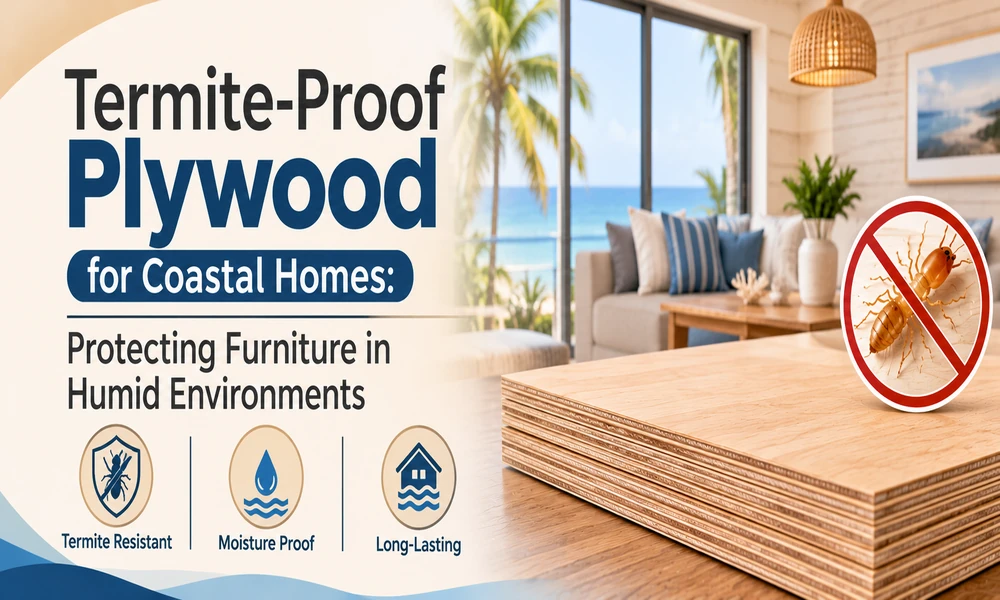
Coastal homes are subject to conditions of humidity, salt-laden air, and prolonged wet-weather periods. These factors have an impact on furniture, cabinets, wardrobes, and other wooden interior furnishings. Poor moisture management can at times lead to decay of wood materials while humid conditions create a favorable environment for termites to thrive.
When constructing the interiors of coastal homes, it is something vital to consider the quality of termite-proof plywood. One must check the protective treatment of plywood, construction quality, and suitability for the job. Fortunately, even the right choice in terms of material can contribute to establishing moisture ventilation and control measures.
Why Coastal Homes Need Special Attention
The humidity of coastal regions may differ depending on the weather, and not all rooms are properly ventilated, thus retaining moisture for a long time. Kitchen cabinets, wardrobes near outside walls, and furniture pieces next to the windows can suffer from condensation or leakages.
Termites are another issue that needs consideration. While they are capable of screwing up timber-based materials, at the same time, their signs do not always manifest on finished surfaces. That said, high humidity does not necessarily mean a home is likely to have termites, yet damp surroundings and defects in the building are to be taken into consideration.
How Termite Protection Helps Protect Furniture
Thus, the planning of furniture should include these factors. Depending on the type of the item, certain preservation techniques can be applied to prevent damages from termites. In addition, the kind of protection and the method of preservation may significantly vary from one manufacturer to another. Buyers must check the specifications of the item rather than assume that plywood is equally protected from termites.
Termite-resistant wood sheets can be used for wardrobes, cabinets, and pieces of furniture that need protection from termite damage. It is worth mentioning that the chosen wood must comply with specific requirements related to strength, thickness, bonding, and finishing.
It is also necessary to understand the difference between termite resistance and moisture resistance. Even though plywood is designed to withstand termites, this does not mean that it can be called waterproof. Buyers are to choose the appropriate class of plywood given the actual moisture conditions in the area of installation.
Choosing Plywood for Different Furniture Applications
Different premises set different standards for their furniture materials. For instance, kitchen cabinets must utilize appropriate plywood to ensure moisture exposure is within expected levels. Proper plumbing must be provided, and the joints that are prone to damage must be sealed properly.
As for wardrobes, the most efficient way to prevent moisture-related issues is to avoid any contact with always-wet walls. Sufficient air circulation and regular checks of the surfaces around can help prevent getting any seepage in time. As for the furniture pieces utilized in the living room, they must comply with the load bearing, surface finishing,It is essential to take special care to prevent excessive dampness and too little ventilation of utility and storage spaces. Choosing plywood with termite protection requires a careful review of the type of treatment that has been used, what it is meant for and any limitations of the manufacturer.
Managing Humidity Alongside Termite Protection
Proper materials can only perform well in a controlled environment. Excessive moisture in the air can be harmful to finishes, joints, and wooden elements anyway.
It is necessary to ensure proper ventilation in closed spaces like kitchens and closets so that dampness does not accumulate. Rooftop leaks, plumbing leaks, and wet patches should be dealt with quickly. Store wood and furniture in dry spaces before using them and follow the manufacturer’s guidelines for edging, sealing, and finishing.
Concealed areas like corners, skirting, and the back of furniture should be regularly checked for damage. If there is a suspicion of termite infestation, professional inspection and treatment might be necessary. Simply choosing plywood does not eliminate all the threats of infestation in the place.
Evaluating Plywood Before Purchase
When considering which wood type to buy, one must pay attention to the specifications and information about termite-resistant treatments. It is essential to make sure the wood type is going to be suitable for the intended use.
While comparing the properties of various plywood brands, such as Royale Touche plywood, it is important to ensure that they correspond to all the requirements of coastal interiors. Otherwise, a product could be chosen based just on its termite-proof label.
Conclusion
To ensure long-lasting protection of furniture in coastal properties, it is important to select appropriate materials carefully and apply proper termite treatment. By checking the claims regarding the treatments, choosing the right type of wood, and ensuring its longevity, one should be able to prevent unnecessary damage to their furniture.