
As a Home Owner with Extreme Weather Conditions or Working/Camping Outside, you have no doubt had an unpleasant experience having learned that Electricity and Water are poor bedfellows. An unreliable generator, a trailing extension cord and a battery pack hastily covered with plastic have all been seen by many of us at some point and usually do their worst when least expected.
This article discusses the importance of water protection to an outdoor home set up, what it actually means and other considerations to make before buying.
Weather Doesn’t Pick a Good Time
Storms are notoriously bad at picking when to arrive. A cabin, a farmhouse, a backyard shed or a caravan for the winter have power needs which run through the worst of the weather and are often most needed. Light, fridge, phone charger, sump pump or heater fan.
Traditional back-up options are unviable in an outdoor setting. A gas generator can be loud, require careful fuel management and can’t be sheltered sufficiently due to emissions. Running such a generator in the rain means constructing a shelter around it which brings dangers of its own. Battery packs, meanwhile, tend to be silent and clean but have many with openings which allow ingress of moisture and dirt.
Water ingress can come from many sources, not purely rain. Morning dew, condensation due to large temperature differentials, spillages or even a hose being run nearby or damp ground can combine with poor manufacturing quality to cause corrosion over time. An appliance with a specification which includes moisture resistance negates this particular worry.
What “Waterproof” Actually Means
Although it may sound simple, it’s best to pay attention to the IP (Ingress Protection) rating. The first number relates to resistance to solid materials and the second to liquids. An IP54 rating means that the appliance is protected against limited dust ingress and water sprayed from any direction.
Although suitable for rain and spray conditions, higher numbers are required to protect against submersion (although such ratings are rare on larger power stations due to the requirement for cooling vents). Note that most units which claim to be waterproof are splash-resistant at best, and that is the level of protection required for an outdoor home. Always avoid placing the appliance on wet ground and take care to cover the ports when not in use. A soaked unit must not be charged until it has been completely dried and inspected.
Where Outdoor Power Gets Used
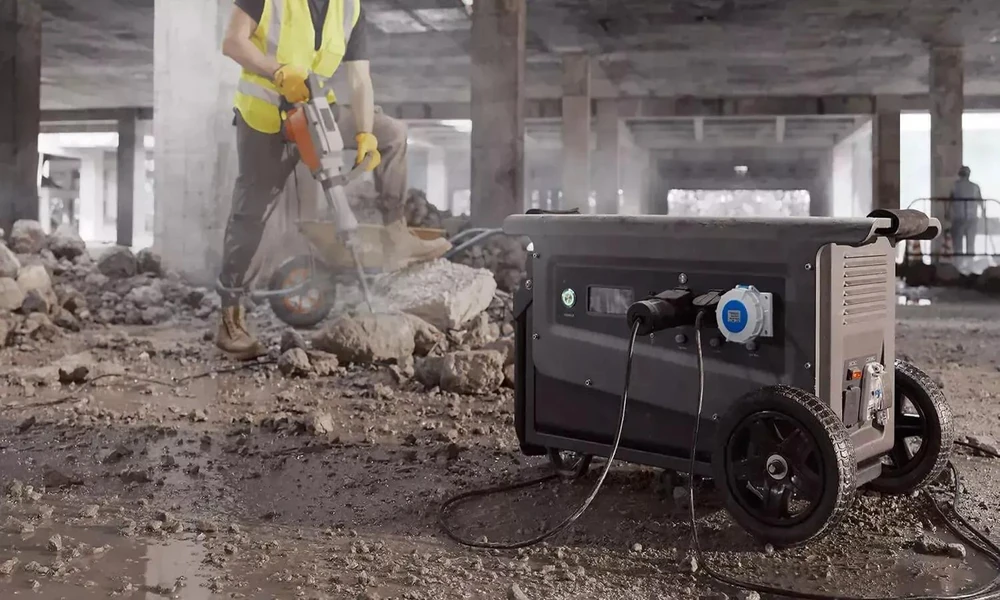
Consider the wide range of situations the appliance will be used. Homeowners with renovations ongoing often require electricity for weeks at a time. Contractors on a building site need to run saws, drills and lights in conditions of dust and occasional drizzle. Off-grid or RV living requires a power source throughout the year. Farmers and hobbyists often run tools in the fields, away from power sockets. All of these need heavy-duty equipment such as a SOUOP Waterproof Industrial Power Station to last them through the work season, regardless of the weather.
The common feature of all of these situations is the lack of a clean, dry environment. Dust, mud, humidity and temperature variations are normal and the power equipment must be able to match the resilience of the tools it is being used with.
Another major area of use is as emergency back-up. If the regional electricity supply is interrupted by a storm, it is rare that the user will be able to move the unit indoors. Many people choose to place it on the house’s covered porch or in the garage with the door open. Weather protection offers flexibility as to where the appliance can be placed.
Other Considerations Apart from Weather Protection
Although water resistance is important, there are several other considerations to take into account when choosing a power station.
Battery chemistry. Lithium iron phosphate, or LiFePO4 cells are the common choice for high quality products. These have a much higher cycle life (often 3,000 or more) and can withstand high temperatures better than many other lithium variants and are generally regarded as safer.
Output requirements. Add up the wattage of all the appliances which you need to run simultaneously, and make sure there’s headroom. Tools and compressors often require a much higher surge on start-up than the continuous running wattage quoted, so check that the battery’s inverter can cater for these. A fridge and some lights will take far less than a table saw or air conditioning unit.
Capacity needs. Measured in watt-hours, this indicates how long the unit will last. A 5kWh battery will theoretically run a 500W inverter for around ten hours, but realistically slightly less after accounting for inverter losses. The ability to expand the unit is useful if requirements grow, and many battery packs can take additional modules to increase the runtime. Charging options. How long will it take to charge from the mains? How much solar input can be harnessed? Solar charge controllers are an important factor, as MPPT controllers extract more power from the solar array, particularly in low-light conditions. Can the appliance serve as a UPS (uninterrupted power supply)? This means that in the event of a power cut, the switch-over to battery is almost instantaneous and protects computers and routers from power fluctuations.
Weight and handling. A large battery can be incredibly heavy. Look for wheels, sturdy handles and accessible ports to make day-to-day use easier.
Habits Which Prolong the Life
Even the best appliances benefit from good care and attention. Always place the battery on a raised surface such as a pallet or shelf to prevent water pooling at the base. Avoid direct sunlight if possible as this affects battery performance more than rain. Use outdoor-rated extension cords and check the connectors for signs of damage. If the appliance is going to be stored for a period of months, keep it at a partial charge and top it up occasionally. Clean off any mud or dust with a damp cloth, never a high-pressure washer as this can cause water to get in at the ports.
Lastly, take care to avoid putting the ‘waterproof’ claims above common sense. Keep extension cords out of standing water and consider a cover for the appliance if it’s going to be exposed to torrential rain.
Capacity Matching for Real Needs
A good way to plan this out is to make a list of essentials and estimate the hours they’ll be run for. Lights, phone chargers, router and fridge could easily account for two or three kilowatt hours of power use per day. Add in power tools, a well pump and a small heater and it can be seen how quickly the requirements increase. It’s always better to err on the higher side of capacity, as a battery which is consistently run to its maximum will have a significantly shorter lifespan.
There are units which will cater for large requirements, particularly in the 5000W class. A SOUOP Portable Power Station 5000W can run several heavy appliances at once and modules can be added in order to achieve extra runtime. Whichever class is required, it’s important to select an appliance which matches the anticipated load rather than simply looking at the headline statistics.
Final Thoughts
Outdoor power requirements don’t usually wait for convenient times. They appear during a storm, during the middle of a job or on the first night at a new, remote property. A waterproof power station wouldn’t solve all concerns, but it does eliminate the worry that electricity will be lost to the weather. By paying attention to the IP rating, choosing the correct battery chemistry and capacity and caring for the appliance, it should see many years of reliable service.