
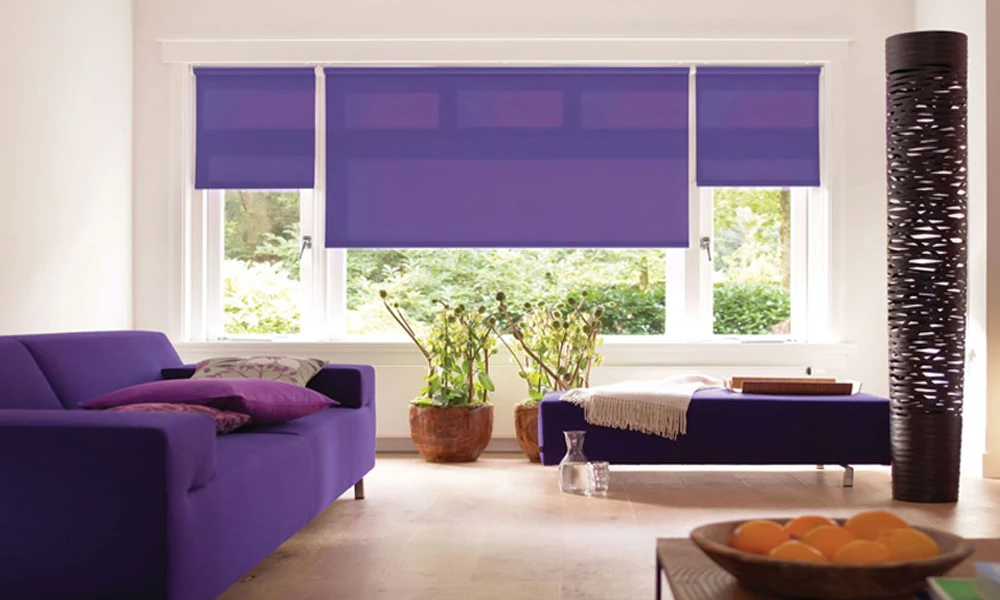
Luxury interiors are not always the ones that announce themselves. In fact, some of the most sophisticated rooms are remarkably restrained, relying on beautiful materials, thoughtful proportions, and exceptional craftsmanship rather than obvious ornament. Nothing feels excessive, yet nothing feels accidental either.
This is the essence of quiet luxury.
Window treatments are particularly well suited to this approach. They occupy a significant amount of visual space, but when designed thoughtfully, they do not need to become the focal point. Instead, they can quietly elevate everything around them through beautiful fabric, precise proportions, subtle texture, and impeccable finishing.
The difference is often in the details. A curtain that falls perfectly to the floor, a roman shade that sits precisely within the window, or a neutral fabric with an exquisite weave can make a room feel considerably more polished without anyone being able to immediately identify why.
What Does Quiet Luxury Mean for Windows?
Quiet luxury is less about a particular color or decorating style and more about restraint and quality.
For window treatments, that means moving away from obvious decoration and focusing instead on materials, construction, proportion, and how the treatment interacts with the architecture.
A quiet-luxury curtain might be a simple linen panel in a warm neutral. A roman shade might feature a subtle woven texture rather than a bold pattern. The hardware might be understated, and the heading almost invisible.
Nothing necessarily demands attention.
But the entire treatment looks exceptionally considered.
Start With Beautiful Fabric
Fabric is arguably the most important element when creating a luxurious window treatment.
You do not necessarily need the most expensive textile. What matters is choosing a fabric with depth, an attractive hand, and a quality that works with the room.
Linen is an obvious choice for understated luxury because its natural texture gives even simple colors dimension. Velvet can bring richness without requiring pattern, while beautifully woven cottons can create a more relaxed interpretation of luxury.
Look closely at the fabric rather than judging it solely by color. How does the surface catch the light? Does it have subtle variation? Does it drape naturally? Does it feel substantial without being heavy?
These are the details that become noticeable once the overall design is stripped back.
Choose a Restrained Color Palette
Quiet luxury rarely depends on high contrast.
Instead, look at shades such as ivory, cream, taupe, mushroom, warm gray, soft beige, stone, and muted earth tones. These colors allow the texture and construction of the treatment to take center stage.
That does not mean your custom curtains have to match the walls exactly.
A tonal difference can create subtle depth. A warm ivory curtain against a creamy wall, for example, can produce a sophisticated layered effect. Similarly, a taupe curtain against a pale gray wall can introduce warmth without disrupting the calm palette.
The goal is cohesion rather than perfect coordination.
Texture Is the Secret Weapon
When color and pattern are restrained, texture becomes much more important.
A plain linen curtain can have more visual impact than a printed polyester panel simply because its weave interacts beautifully with light. A subtle herringbone, slub, basketweave, or other tactile finish can give a neutral treatment dimension without making it decorative in an obvious way.
This is particularly effective in rooms with other natural materials.
Pair a textured curtain with oak, marble, plaster, leather, wool, or stone and you create a layered material palette without introducing additional colors.
Quiet luxury is often about exactly this kind of subtle contrast.
Get the Length Exactly Right
Few things undermine an otherwise sophisticated interior as quickly as poorly proportioned curtains.
Curtains that stop several inches above the floor can make the treatment feel unfinished. Excessive puddling may look deliberate in certain traditional interiors, but for a quiet-luxury aesthetic, a precise floor-length finish often feels more polished.
The curtain should relate to the architecture as though it were designed specifically for it.
This is where custom curtains can make an enormous difference. Rather than adapting a standard panel, you can determine the exact finished length and width based on the room and fabric.
The result is subtle, but the effect is powerful.
Mount Curtains With Architectural Intent
Where you install the curtain hardware matters just as much as the fabric.
Mounting the rod higher and extending it beyond the window can make the opening feel larger and the ceiling feel taller. In a room with high ceilings, full-height curtains emphasize the architecture. In a smaller room, a carefully positioned treatment can create the illusion of additional height.
The objective is to make the window treatment feel integrated with the room rather than attached to the window as an afterthought.
In a quiet-luxury interior, those architectural relationships matter.
Invest in Fullness
Luxury is often visible in the way fabric behaves.
Curtains with insufficient fullness can look flat and underwhelming, regardless of how beautiful the fabric itself may be. Generous fullness creates soft, controlled folds and gives the treatment a sense of substance.
The amount required depends on the fabric, window dimensions, and overall style. A lightweight linen may benefit from a relaxed, generous treatment, while a heavier velvet can create substantial folds with less fabric.
The objective is not simply to use more material. It is to create a beautiful fall and rhythm when the curtains are open or closed.
Keep the Hardware Understated
Quiet luxury does not mean ignoring hardware. It means choosing it carefully.
Slim rods, discreet tracks, simple rings, and restrained finials can all work beautifully. The finish should relate naturally to other metals in the room, whether that means aged brass, bronze, black, or another understated finish.
Avoid choosing hardware simply because it looks expensive.
The best hardware often disappears into the overall composition, allowing the fabric and architecture to take priority.
Consider Roman Shades for a Tailored Look
Curtains are not the only route to an elevated window.
Roman shades can create a beautifully tailored appearance, particularly in rooms where full-length drapery would feel excessive. Their structured silhouette works well in bedrooms, dining rooms, studies, and rooms with furniture positioned close to the window.
A solid linen or subtly textured fabric can give the shade a refined, understated quality.
Custom roman shades are especially effective because the proportions can be designed around the actual window. When the shade sits perfectly within the architecture, it feels more like part of the room than a functional covering.
Don’t Overlook Lining
The visible fabric may be what initially attracts your attention, but lining is one of the details that determines how a window treatment actually performs.
A suitable lining can improve light control, privacy, insulation, and the way the fabric hangs. In bedrooms, blackout lining may be desirable. In living spaces, a lighter lining may preserve more natural light while providing privacy.
Good window treatments should look beautiful from both inside and outside the room.
Function and luxury should not be treated as opposing qualities.
Layer Without Making It Look Layered
Layering window treatments can add considerable sophistication, but it should feel effortless.
A sheer curtain behind a heavier drape can soften daylight while providing privacy. The outer layer can then be drawn when you want greater light control or a more intimate atmosphere.
For a quiet-luxury aesthetic, keep the relationship between the layers simple. A warm white sheer paired with a natural linen drape, for example, can create depth without looking overly styled.
The layers should complement one another rather than compete.
Let Pattern Be Subtle
Quiet luxury does not mean avoiding pattern altogether.
A subtle stripe, tonal check, understated botanical, or small-scale geometric can bring personality to a window without overwhelming the room. The important thing is to keep the pattern connected to the wider palette.
If the room already contains statement wallpaper or artwork, a textured solid may be more appropriate.
If the interior is extremely restrained, a sophisticated pattern can become a discreet point of interest.
Think less about whether a fabric is “plain” or “patterned” and more about how much visual energy it brings into the room.
Pay Attention to the Small Details
The most luxurious-looking window treatments often succeed because of details that are barely noticed individually.
The heading sits correctly. The hem is beautifully finished. The fullness is appropriate. The pattern is positioned thoughtfully. The fabric hangs evenly. The hardware feels proportional. The treatment extends to exactly the right point beyond the window.
None of these elements necessarily screams luxury.
Together, however, they create it.
This is why custom drapes can feel so different from ready-made treatments. The entire design can be considered as one composition, rather than assembling a series of predetermined components.
Coordinate Rather Than Match
A quiet-luxury interior should feel cohesive, but not overly coordinated.
Instead of matching the curtain fabric to the sofa, consider repeating a texture. Instead of matching the color exactly to the walls, choose a related tone. Instead of copying the pattern from the rug, borrow one of its quieter colors.
These small connections are often more sophisticated than exact matches.
The room should feel as though its elements belong together naturally.
Let the Windows Support the Architecture
Perhaps the most important principle of quiet luxury is knowing when to step back.
If the room has beautiful molding, exceptional views, striking furniture, or interesting architectural details, the curtains should enhance those features rather than compete with them.
Sometimes the most luxurious treatment is one that almost disappears.
A perfectly proportioned linen panel can frame a beautiful window without distracting from the view. A soft roman shade can give a small window definition while maintaining a clean wall. A sheer can soften strong sunlight without blocking the architecture.
The treatment does its job quietly.
Luxury Is in the Restraint
The beauty of quiet luxury is that it does not rely on obvious signals of expense. It relies on things being exceptionally well considered.
For window treatments, that means choosing beautiful fabric, getting the proportions right, investing in thoughtful construction, and resisting the urge to add decoration simply for the sake of it.
A window does not need elaborate trim or an extravagant print to feel special. Sometimes all it needs is a beautiful linen, generous fullness, precise length, and hardware that has been thoughtfully chosen.
The result is understated but unmistakable.
Beautifully dressed windows should not necessarily be the first thing you notice when you walk into a room.
They should be the reason the entire room feels better.